A creative data marketplace

The information ecosystem the early web was built on has been disrupted. Datatry imagines how it might evolve, ethically.

Training generative AI models on common crawl data shifted the relationship between online creators and the digital infrastructure they rely on for their livelihoods. Today, creative communities feel they have two choices: accept their work will be used as training data, or keep it hidden. Datatry (pronounced data-tree, like geometry) sketches a third option.

Values-based design

An ethical data exchange

Datatry is an unfinished design exploration of a marketplace where creators license their work for the types of uses they choose and according to the terms they set. Six user stories are interwoven across UI screens to illustrate potential new dynamics of trust repair in the data economy — the repair that's necessary for the next wave of information intelligence.

Need I say more? Let's hit it. Explore the sketch

Ethics in technology

Studying the moral challenge at the heart of data scraping for generative ML models has been complex, twisted, and nuanced. As an artist and a writer, I felt this double bind keenly. My online work was used without my knowledge or consent, and I can't get it back, nor will I be paid for it. Can a solution be found? Who should it benefit? What kind of solution could be ethical and sustainable?

All machine learning needs data: vast amounts, for as long as the model continues to be updated. Knowing this, I imagined a way to close-off access to creative data and give control to the owner. The owner should be able to license their work for the uses they choose — ML training or not, download or not, for profit or not — and receive compensation for it. Datatry aims to demonstrate an answer to a key question: How might the dynamics of ML data needs, marketplaces, and scarcity empower the people who create?

The story

One marketplace, many participants, distributed trust

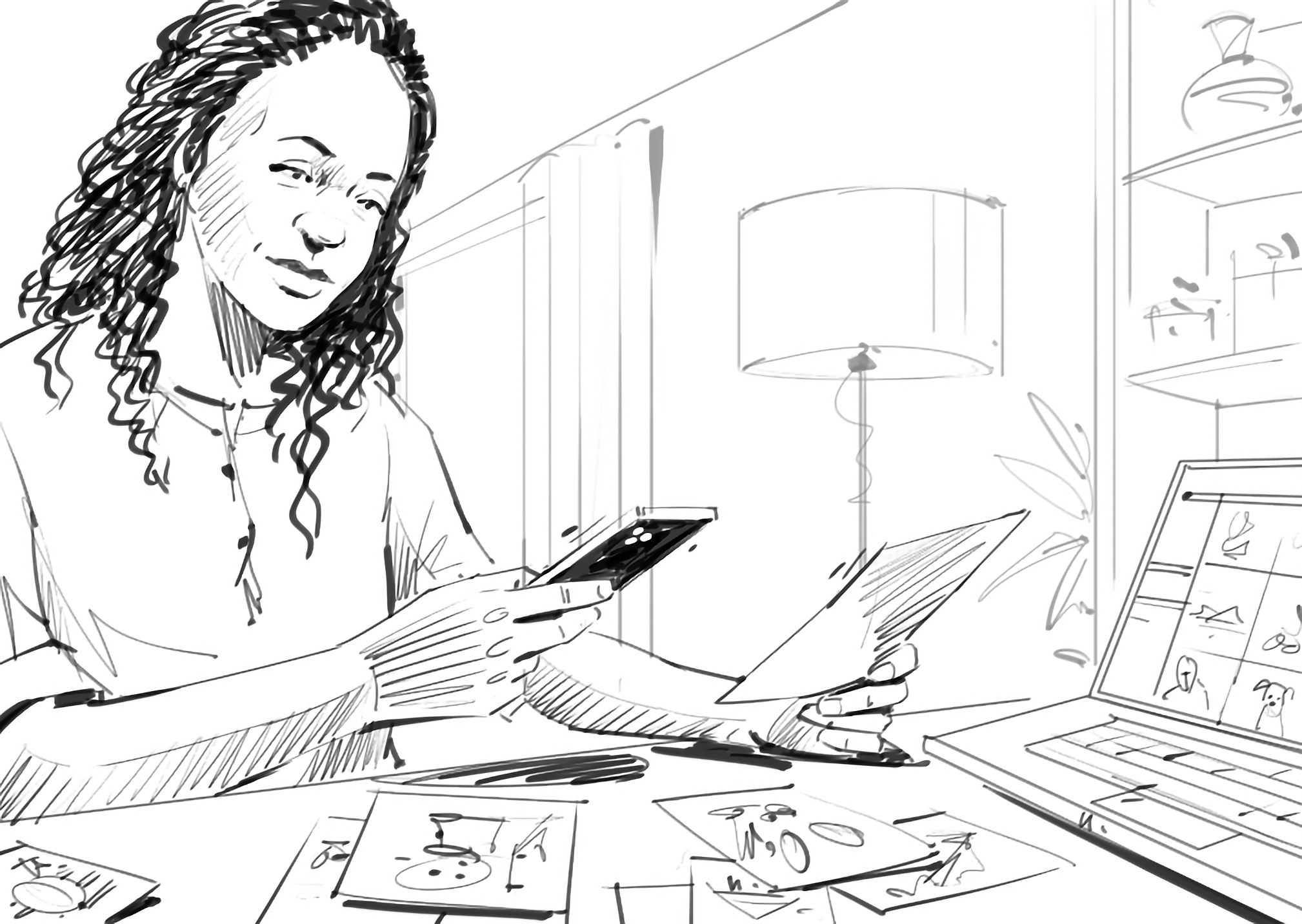
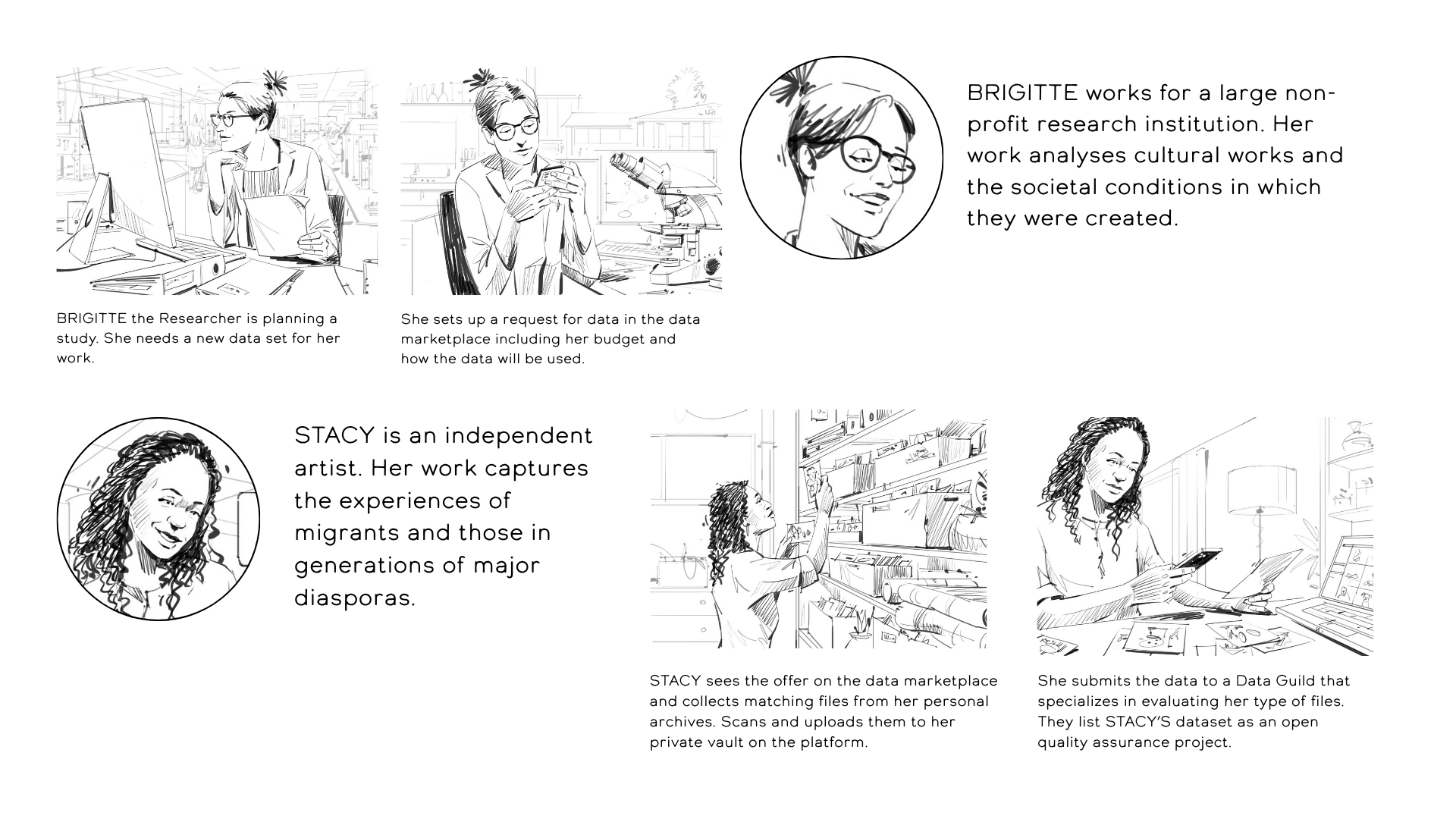
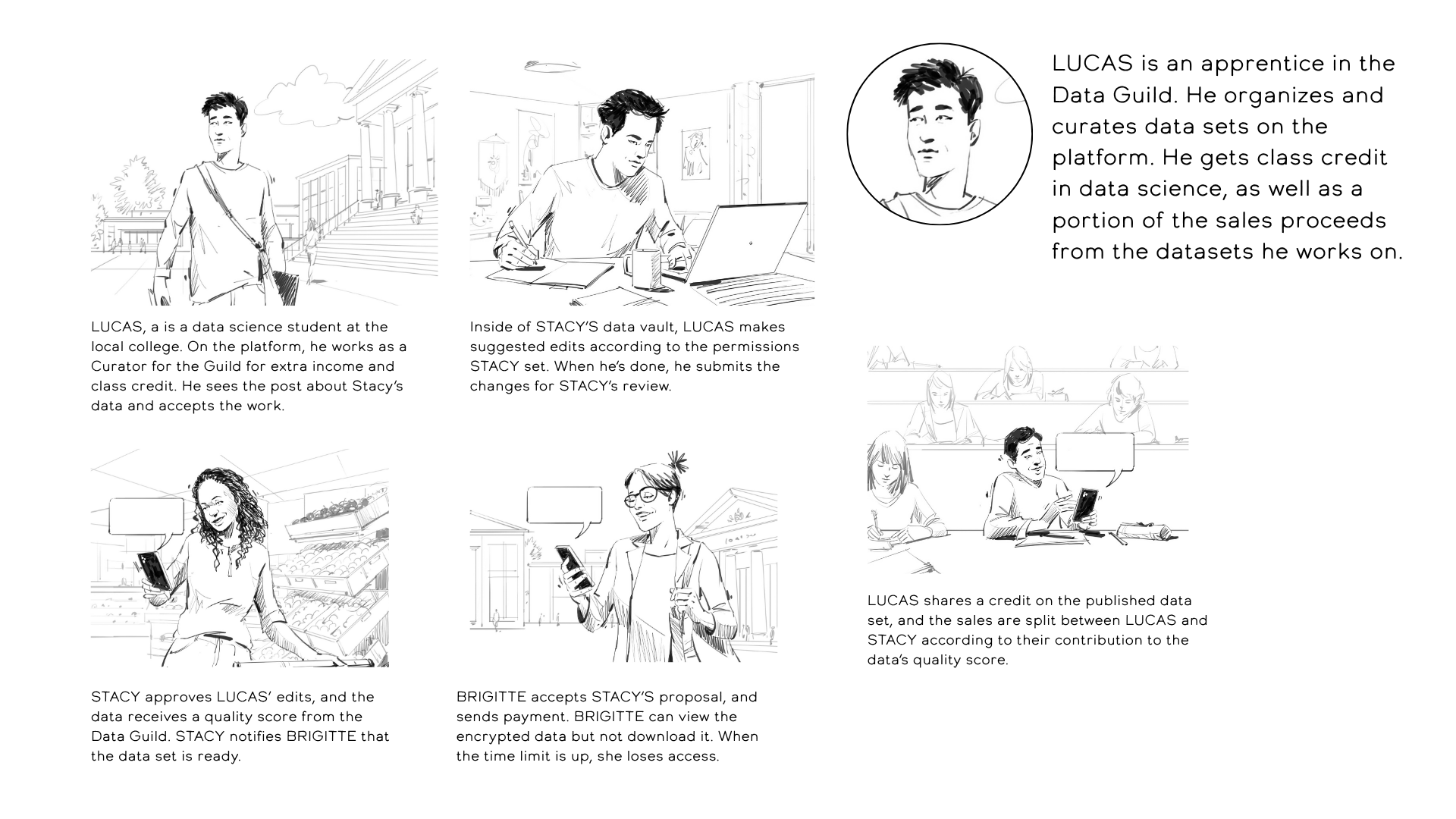
Datatry started as a story. Through narrative and worldbuilding, three key personas emerged: Brigitte, a researcher looking for data with clear provenance. Stacy, an independent family archivist with a small, and special collection. And Lucas, a data science student who is learning how to turn files into data Brigitte can use.

The Data Tree — cast: Brigitte the researcher and Stacy the independent artist

The Data Tree — page one · introducing Brigitte and Stacy

The Data Tree — flow: Lucas the apprentice curator connects Stacy's data with Brigitte's research

The Data Tree — page two · Lucas curates, Stacy approves, Brigitte receives

The system

The life of a file

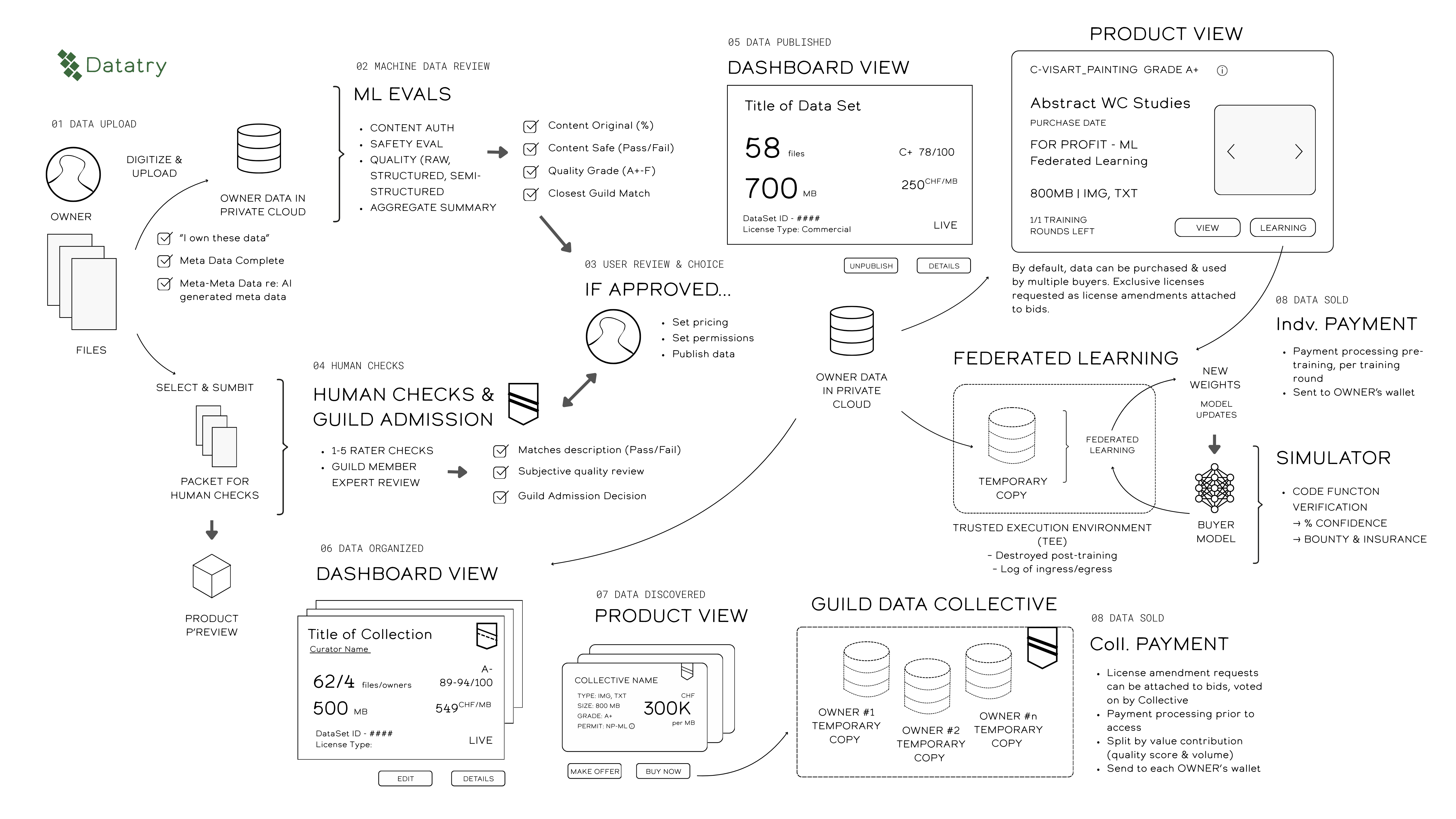
The system architecture sketches the spine of the market. Data comes in with owner-signed provenance, passes machine and human review, gets admitted to a Guild, and is either sold as an individual dataset or pooled with others into a Collective. Buyers train inside of a trusted execution environment, so owners can retain custody of their raw files. The schematic below shows the critical path from uploading to federated learning.

Datatry system schematic: eight-step flow from data upload through machine review, human checks, user approval, publication, discovery, and sale — with federated learning inside a trusted execution environment on the buyer side.

Datatry system schematic · from upload to trained model, with federated learning inside a trusted execution environment

Meet the cast

Six people, one exchange

The UI screens build out the stories of the people who use them. Here's who you'll meet as you click through, in order of appearance.

Stacy

Owner · artist

An independent artist with a personal archive to license. She is part of a Guild and a member of The Crossings Collective.

Brigitte

Buyer · researcher

A researcher looking for training data with a clear provenance. She opens a request for data, and finds Stacy's dataset. She runs a code simulation, and makes an offer.

Lucas

Curator · student

A data science student working for a Guild as an apprentice curator. He shapes Stacy's files into a dataset Brigitte can use, and receives shares of future sales.

The Crossings Collective

Collective · multi-owner

A group of data owners who pool a shared dataset and vote together on offers, license amendments and exclusive deals.

Patrice

Guild · expert reviewer

A domain expert in the Guild Stacy submits her data to. She grades submissions, sets price floors, and admits datasets into the Guild.

Chen

Investigator · enforcement

An investigator who picks up bounties on suspected license violations, beyond federated learning policy enforcement. Chen reviews the alert, gathers evidence, and either confirms or rejects the claim.
Use case, edge case

Follow the happy path, then see how license violations are caught

Story A · Happy path

Stacy licenses to Brigitte

Stacy uploads a personal archive, it passes evals, ratings, and gets curated and scored by Lucas before submitting the data to a Guild for expert review and a grade. Brigitte discovers the work, tests her script on it, and makes an offer. The licensing terms are signed by both, and training happens inside the vault: the files never leave Stacy's control.

  1. Upload Stacy uploads her Diaspora Portraits archive; it's verified, graded, and priced.
  2. License Brigitte finds the dataset, reviews provenance, and submits an offer.
  3. Train The buyer's model learns inside a trusted execution environment. The learnings go to the buyer; the files stay with the owner.

Story B · Bad actor

The Collective catches a violation

Stacy's Collective, The Crossings, faces an offer with amendments from a profile with a sketchy history. The four owners vote and approve an untrustworthy buyer. Later, the licensed model surfaces in someone else's product, flagged by the platform's automated monitoring system. A Collective member files a claim and an investigator takes over.

  1. Governance The Collective reviews an amended offer and puts it to a vote among owners.
  2. Enforcement A licensed model surfaces where it shouldn't; the compliance monitor flags it.
  3. Investigation The investigator gathers evidence, follows the trail, and closes the loop.

Ethical design strategy

The life of a screen

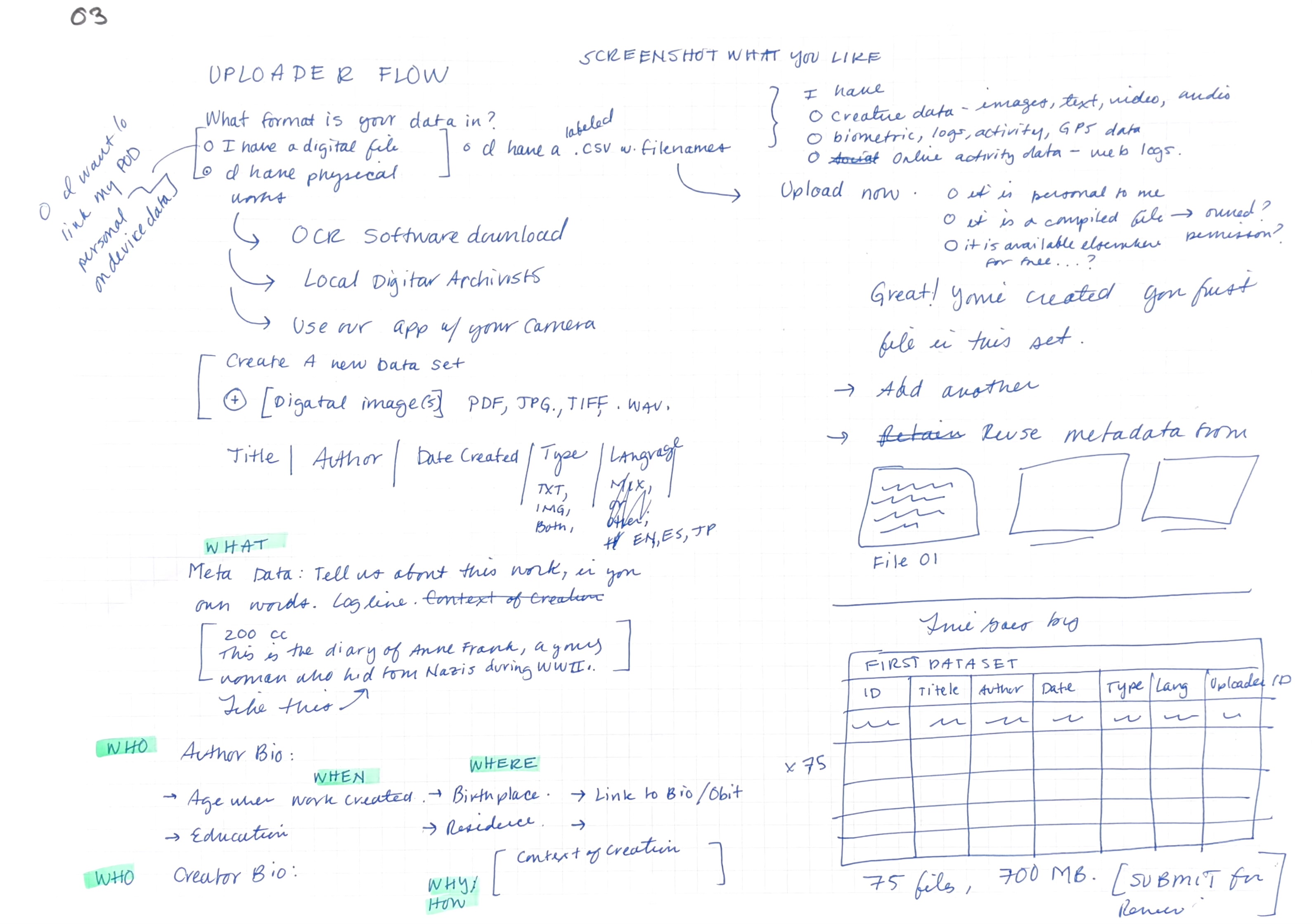
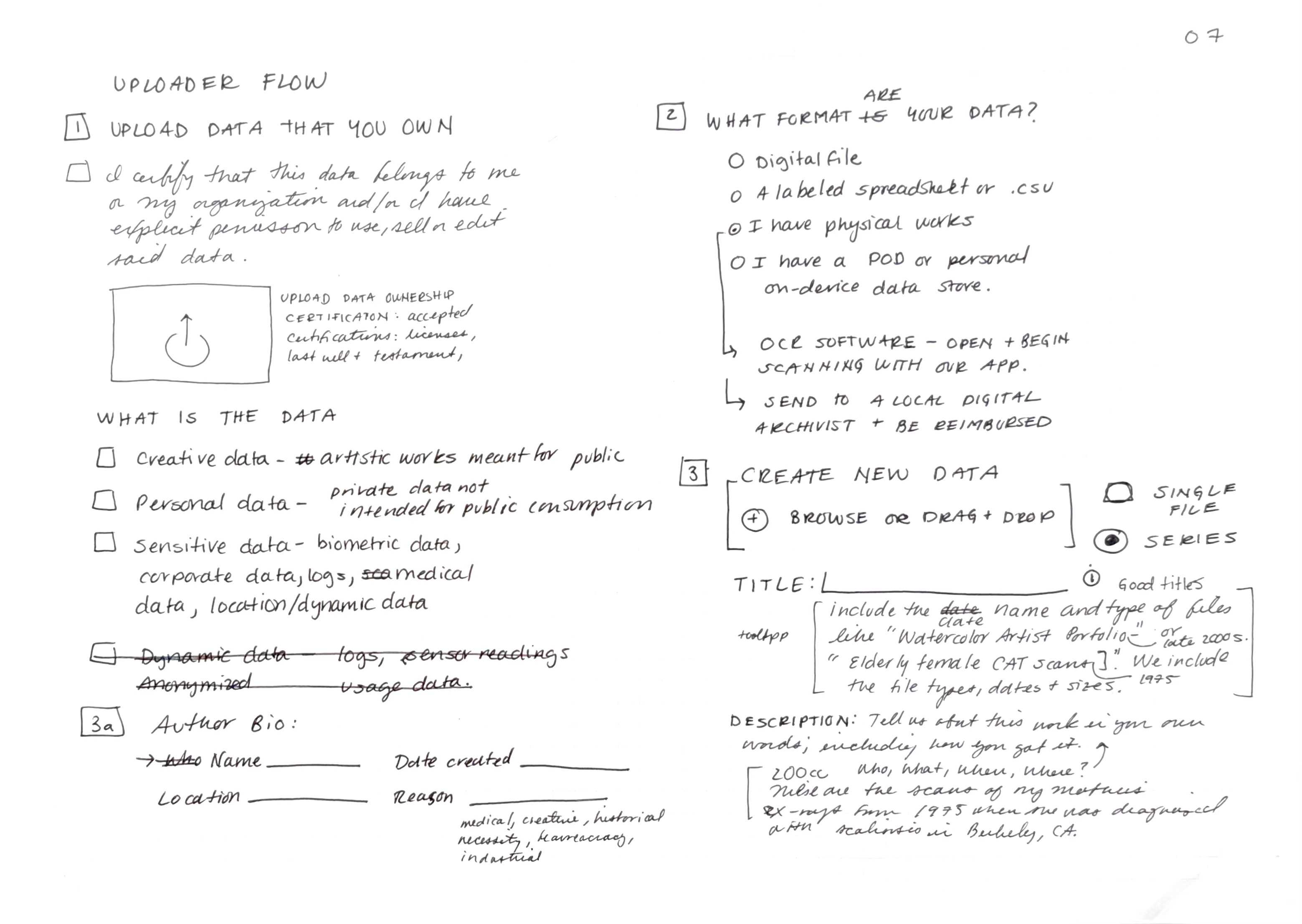
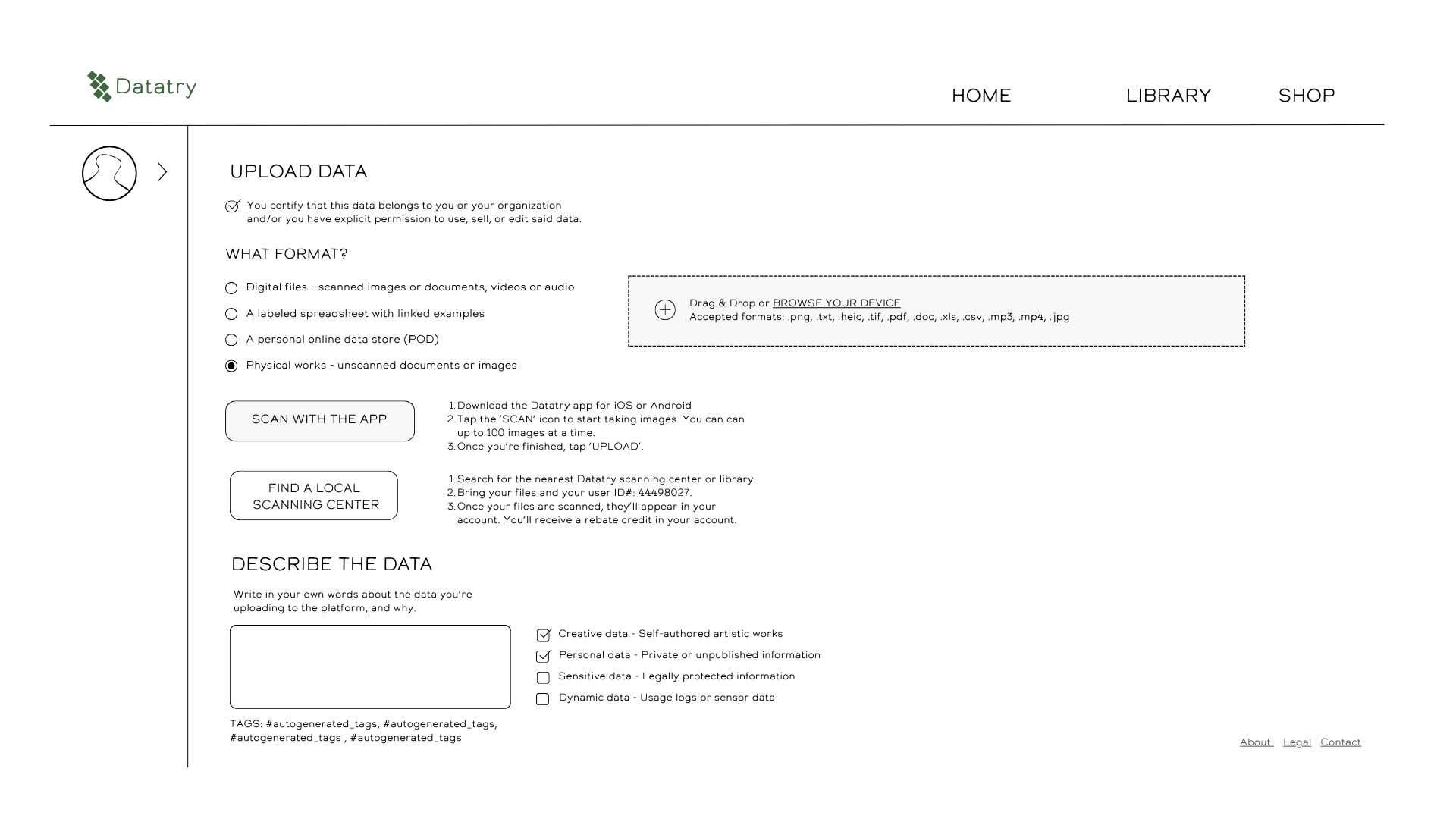
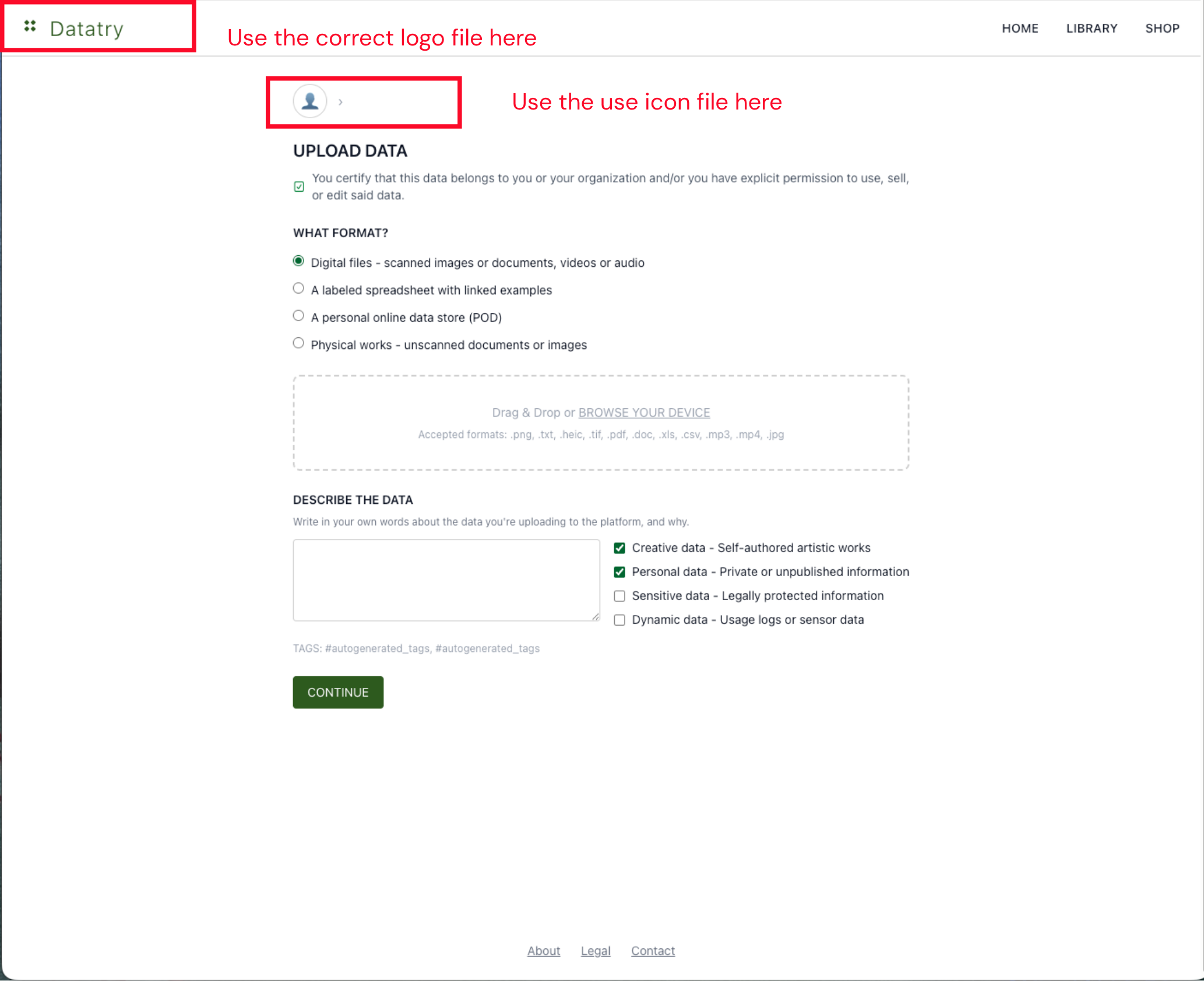
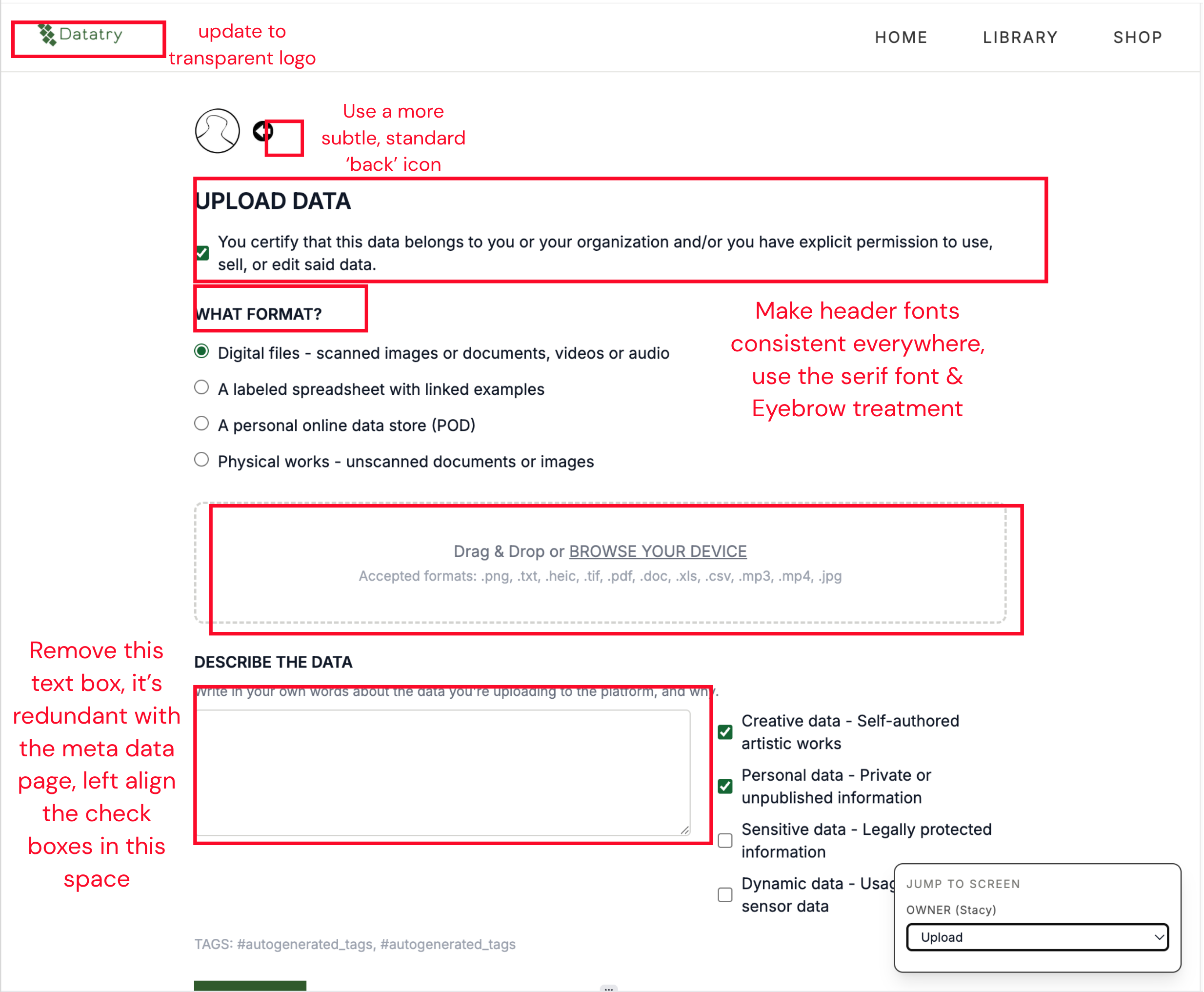
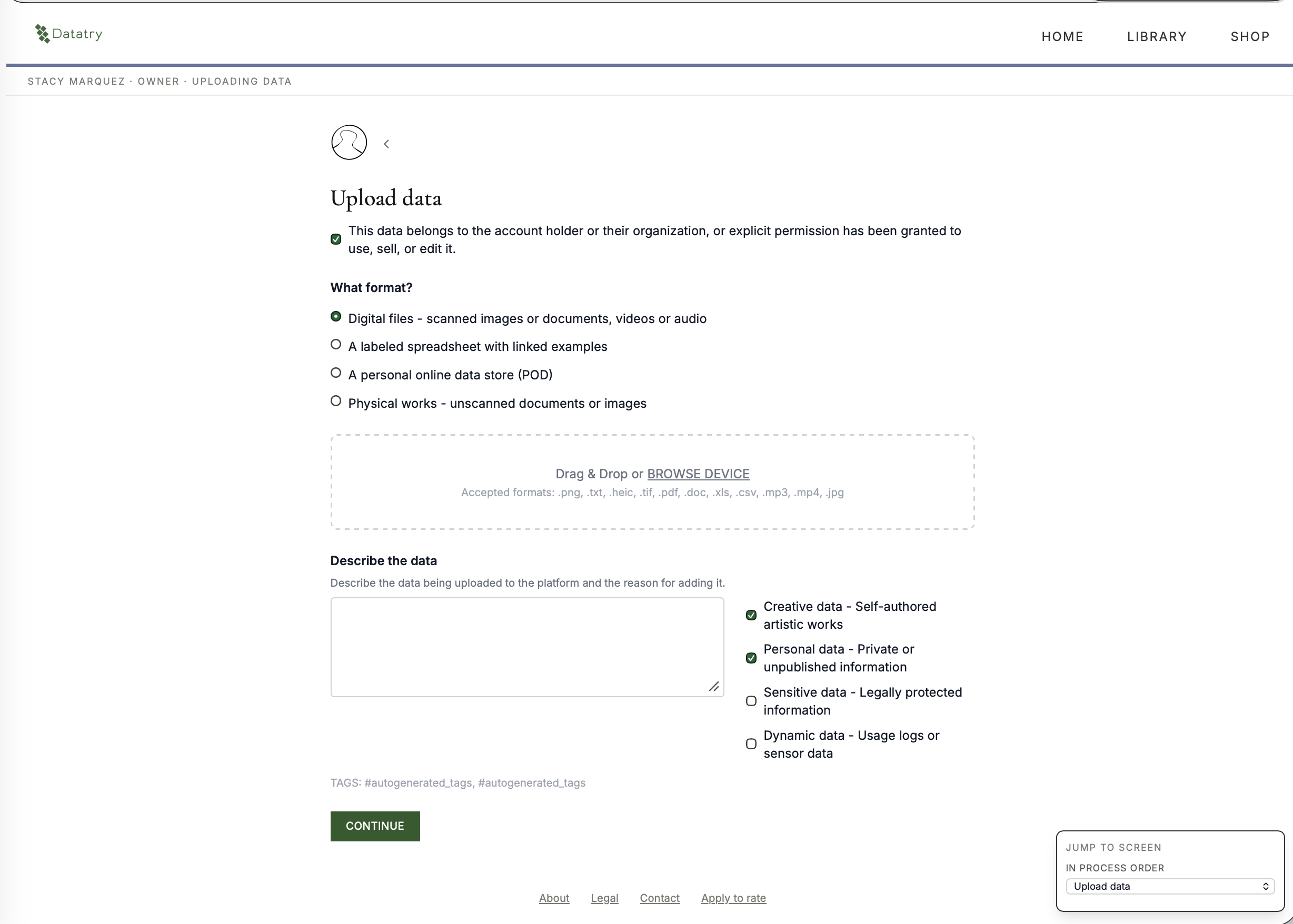
The process spanned craft-first creation and AI-generated screens, using paper, design software, and LLMs to produce and ideate at varying granularity, precision, and fidelity. The clickthrough design spans over 60 screens, a depth and scope that would otherwise be impossible under the time constraints of the fellowship. Many of the AI-generated screens are sketches that fill out the edge cases based on existing design patterns, though the narrative logic holds throughout.

Below you can see the process of sketching based on needs and values surfaced in interviews and literature, wireframing with reference to existing UIs, and then iterating with an LLM to fill gaps and develop a consistent look and feel.

The extended abstract

The SEED method, applied

The method is described in an extended abstract — findings from six months of interviews, a literature review, and synthesis — and will be presented as an Ethics in Technology practitioner fellowship output in November 2026 at Stanford University.

Read the extended abstract